
Bring a little fun into your kitchen.
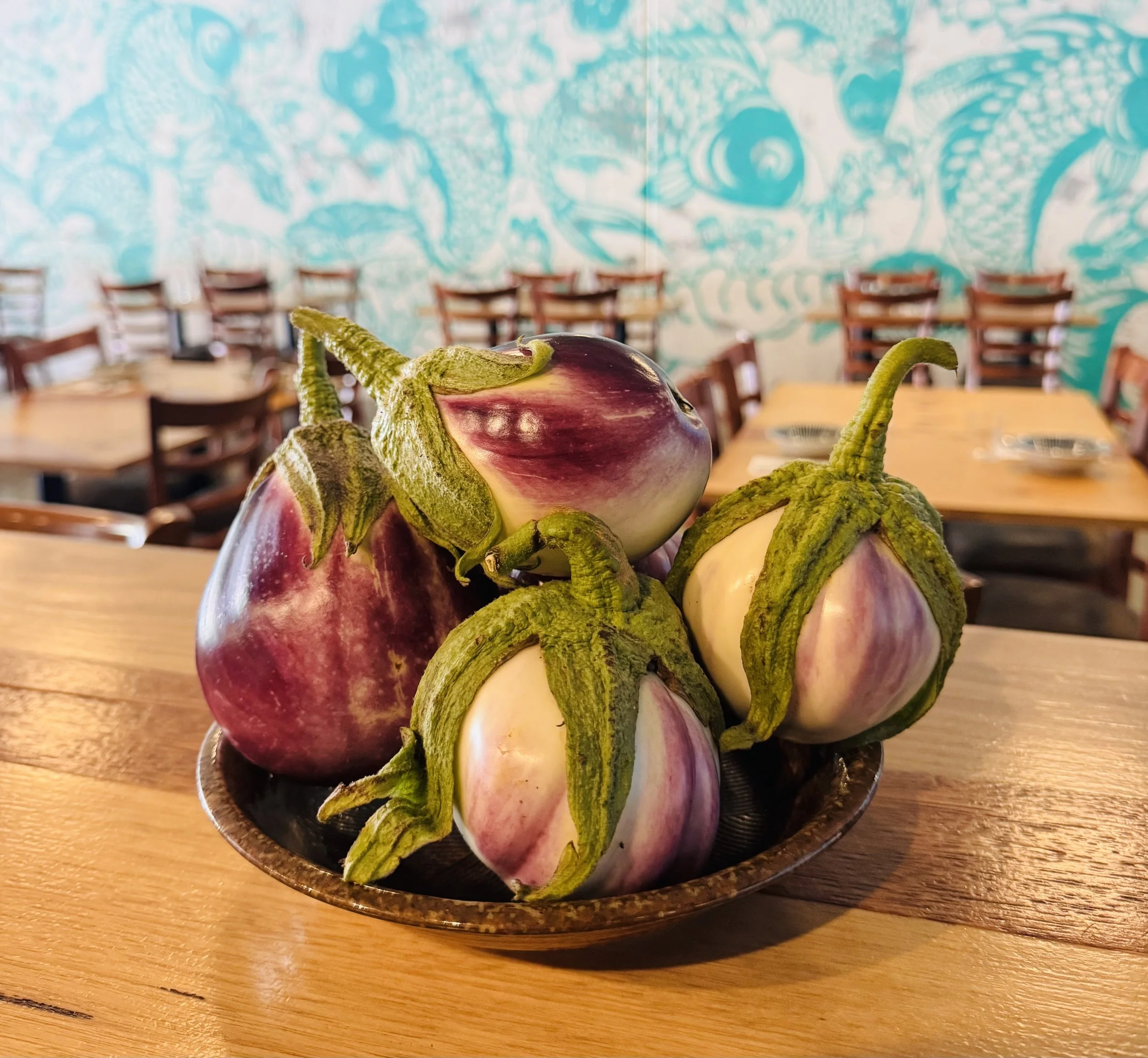
Not everything we cook ends up on the menu. Over the years we’ve collected recipes from our travels, home kitchens, and simple meals shared with friends and family.
The Fun is where we share some of those dishes — the ones we love cooking, even if they never make it onto the menu at The Flying Pigeon.
Take them into your own kitchen, have a little fun, and share with the loved ones.
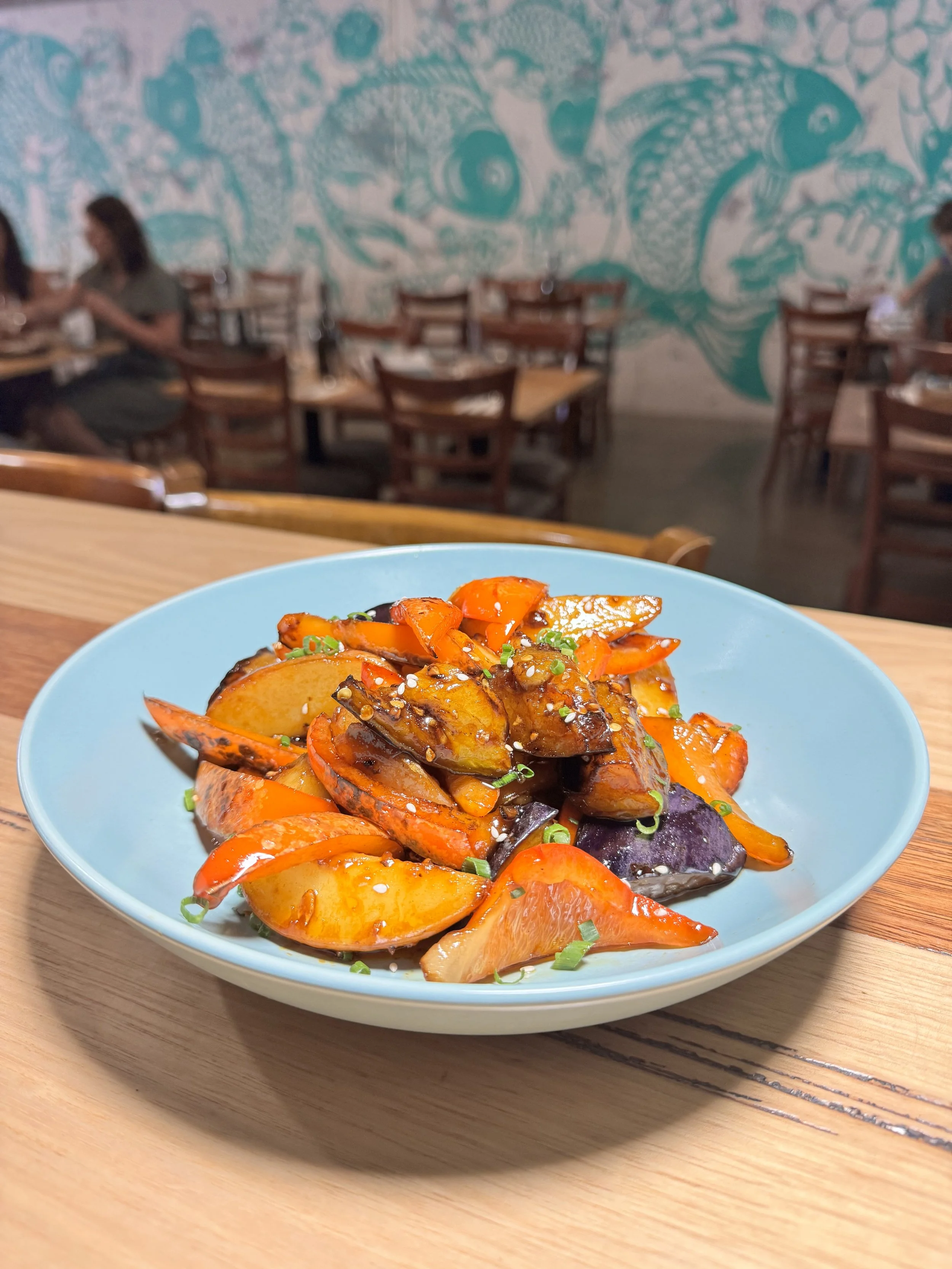
Di San Xian 地三鲜(Vegan)
Three Vegetables of the Earth
This is one of our go-to earthy vegetable dishes at the restaurant. It’s based on the classic northern Chinese combination of potato, eggplant and capsicum, but it’s also a practical end-of-service dish for us — a way of bringing together vegetables left over after curry prep or vegetables that haven’t sold by the end of the night. It’s flexible, forgiving, and designed to work with what you already have.
Ingredients
2 medium potatoes
1 large eggplant
1 capsicum
Neutral oil, for stir-frying
1–2 cloves garlic, crushed
Chilli, to taste
Sauce (flexible):
Soy sauce, vegan oyster sauce or mushroom sauce, and a pinch of sugar
orAny good stir-fry sauce you already have in the fridge or cupboard
(Optional: splash of Shaoxing wine or water)
Method
Peel and cut the potatoes into chunky pieces. Boil in salted water until just cooked through, then drain well and allow the steam to dry them off.
(Leftover roast or boiled potatoes can be used instead — just cut them into similar-sized pieces.)Cut the eggplant into large chunks and soak briefly in salted water. Drain and pat dry.
Heat a wok over high heat and add a splash of neutral oil.
Stir-fry each vegetable off individually:
Fry the potatoes until lightly coloured, then remove from the wok.
Add a little more oil if needed and stir-fry the eggplant until softened and taking on colour, then remove.
Stir-fry the capsicum last, just until slightly softened but still holding some texture, then remove.
Return the wok to the heat with another splash of oil, add the chilli and crushed garlic, and stir-fry briefly until fragrant.
Add all the vegetables back into the wok, pour over your chosen stir-fry sauce, and toss everything together.
Stir-fry until the vegetables are well coated and the sauce tightens up and glazes them.
Taste, adjust seasoning if needed, and take straight off the heat.
To Serve
Serve as a side dish with another stir-fry or alongside Asian-style roast meats, or simply with steamed rice.
Kitchen note
This dish works just as well with leftovers: roast potatoes, pre-cooked potatoes, or vegetables left over from earlier prep can all be folded in. The key is cooking each component separately so everything keeps its own texture before being brought together in the wok.
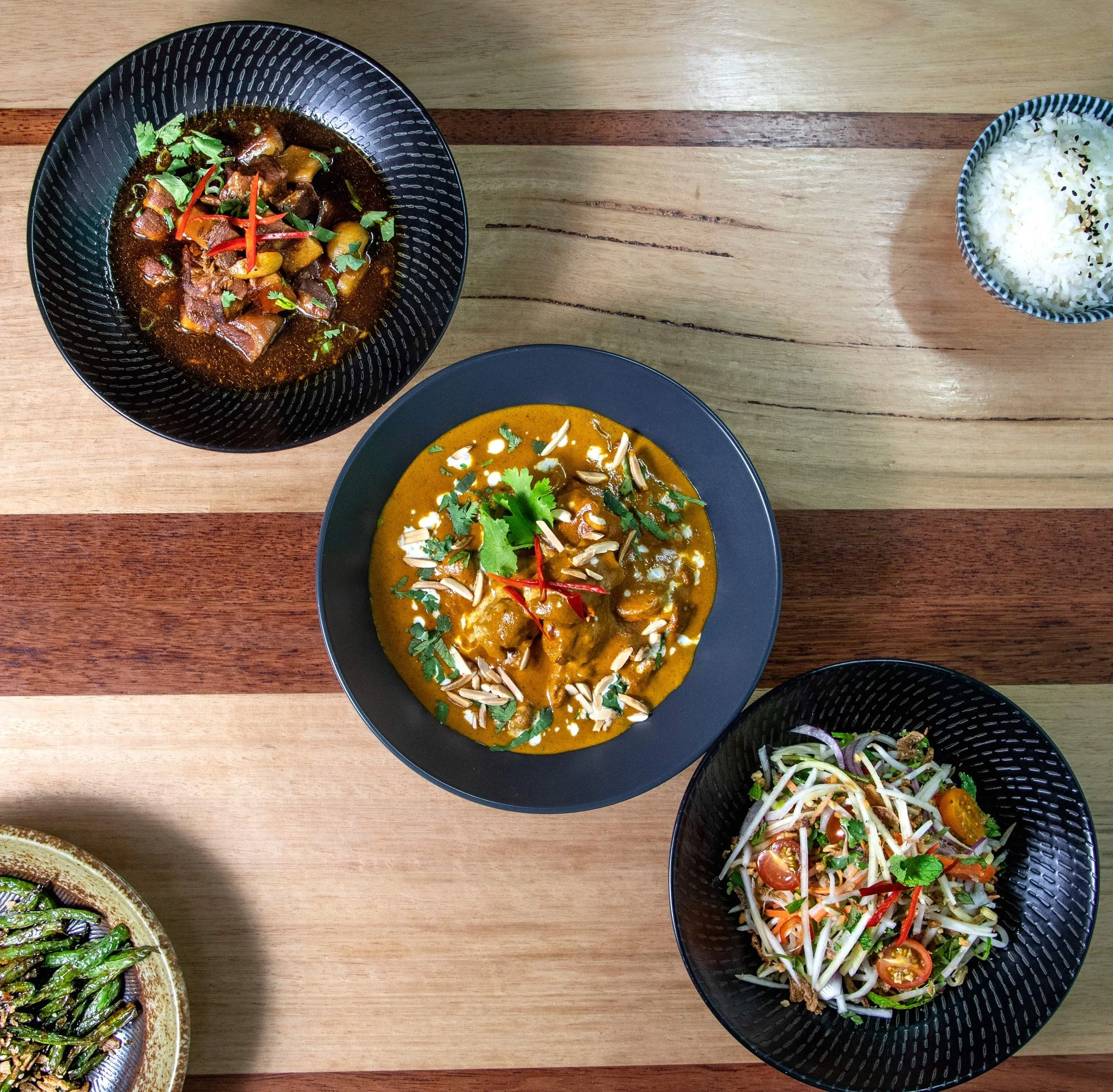
Green Mango Salad (Vegan)
Serves: 2–4
Ingredients
1 large green mango, peeled and julienned
1 small carrot, julienned
2 cherry tomatoes, cut into quarters
½ small red shallot, finely sliced (optional)
1 tsp finely sliced small red chilli (adjust to taste)
2 tbsp roasted peanuts, roughly crushed
1-2 tbsp fresh finely chopped coriander leaves
1 tbsp finely chopped fresh mint leaves (optional)
1 tsp finely chopped fresh Vietnamese mint
Dressing
1 tbsp lime juice
1 tbsp vegan fish sauce (or coconut amino for a soy free option)
1 –2 tbsp palm sugar or brown sugar
3 tbsp water
1 small clove garlic, finely minced (optional)
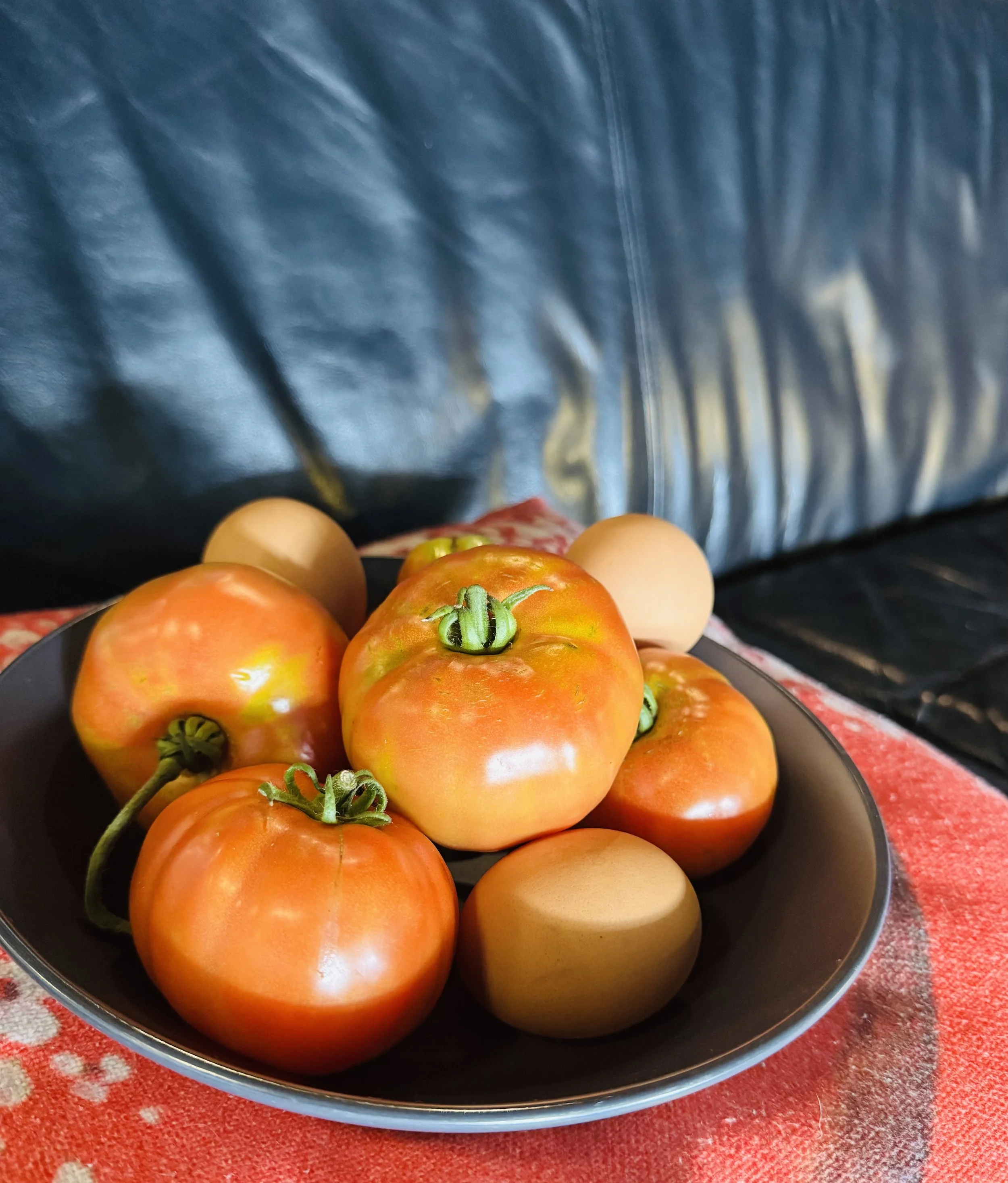
If you don’t have any dietary restrictions, we recommend using fish sauce in the dressing. It adds a deeper savoury flavour and brings a more authentic balance to the salad.A humble, comforting dish found in countless Chinese homes, tomato and egg stir-fry is loved for its balance of sweet, savoury, and bright tomato flavour. It’s quick to cook, inexpensive, and perfect served over steamed rice.
While eggs have been a staple in China for centuries, tomatoes are actually a relatively recent addition to Chinese cuisine, they have became widely used in Chinese cooking during the late 19th and early 20th centuries.
As tomatoes became more common, home cooks discovered how well their natural acidity paired with soft scrambled eggs. The dish quickly became a comfort food across China, especially because it requires only a few ingredients and cooks in minutes.
Today it is still one of the favourites in China. Every family has their own variation—some prefer it slightly sweet, others more savoury—but the essence remains the same: silky eggs and juicy tomatoes.
Tomato and Egg Stir-Fry
(西红柿炒鸡蛋)
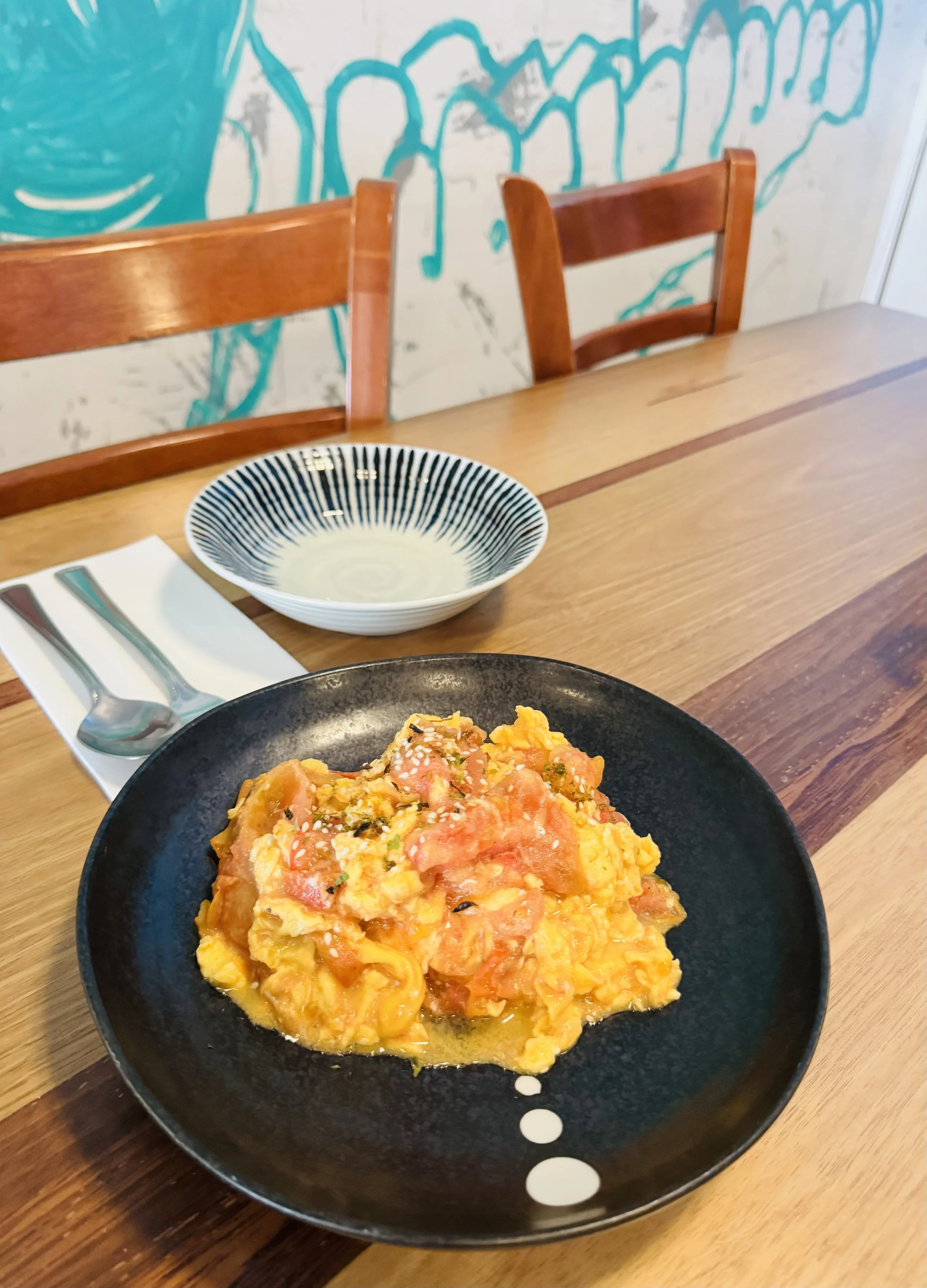
Serves: 2–3
Cooking time: about 10 minutes
Ingredients
3 large eggs
2–3 ripe tomatoes, cut into wedges
2 cloves garlic, finely chopped (optional)
2 tbsp vegetable or olive oil
½ tsp salt
½ tsp sugar
2–3 tbsp water or light stock
1 spring onion or chives, finely chopped (optional)
Method
Whisk the eggs
Crack the eggs into a bowl and whisk with a pinch of salt.Cook the eggs
Heat 1 tbsp oil in a wok or frying pan over medium heat.
Pour in the eggs and gently scramble until just set but still soft.
Remove from the pan and set aside.Cook the tomatoes
Add the remaining oil to the pan. Stir-fry the garlic briefly until fragrant.
Add the tomatoes and cook for 2–3 minutes until they begin to soften and release their juices.Season
Add salt, sugar, and water or stock. Let the tomatoes simmer briefly to create a light sauce.Combine
Return the eggs to the pan and gently fold them through the tomatoes. Cook for another 30–60 seconds.Finish
Scatter with sliced spring onions or chives and serve immediately.
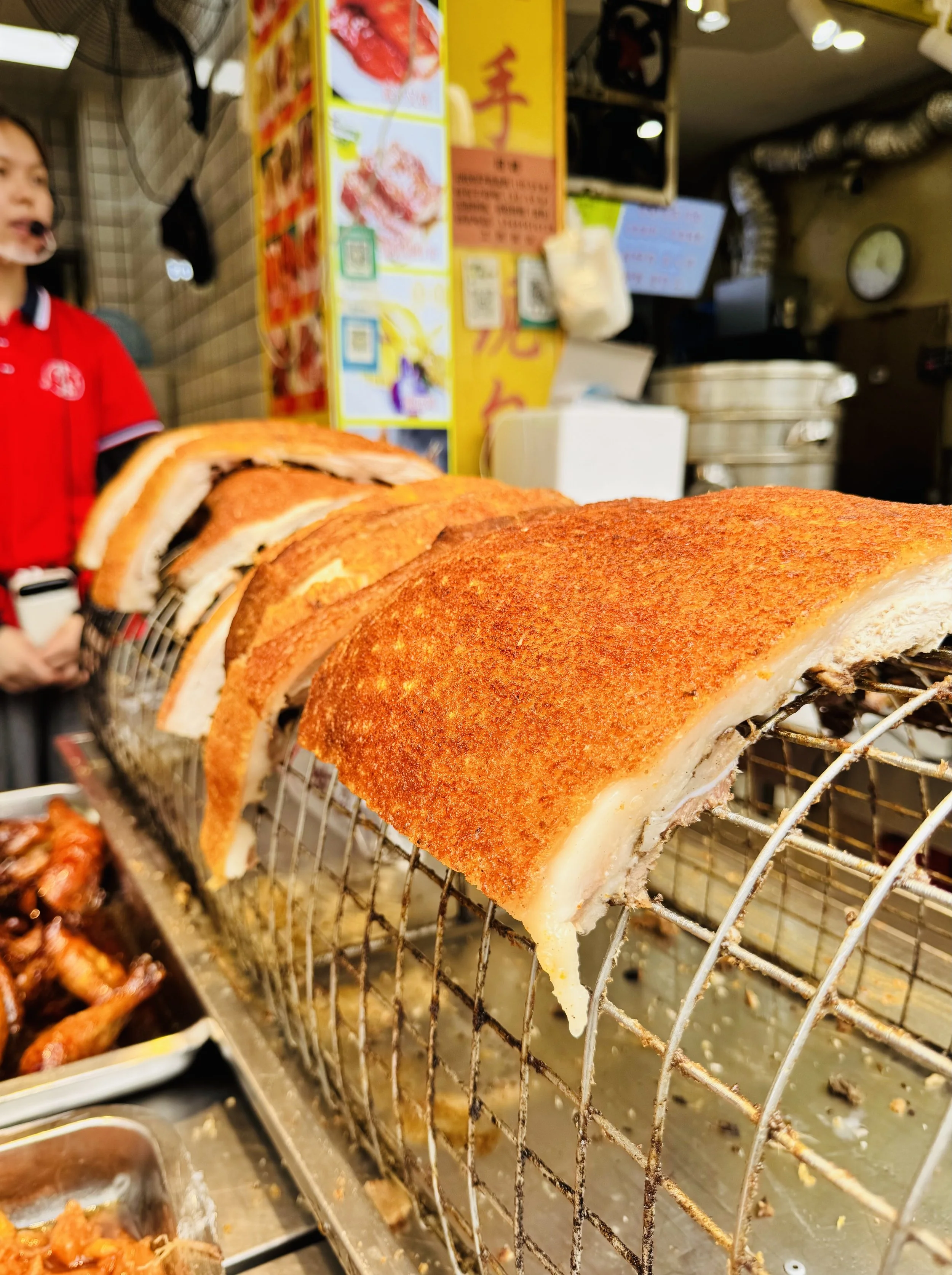
Hong Kong–Style Roast Pork (Crispy Pork Belly)
港式烧肉(脆皮烧肉)
Serves: 4-6
Ingredients
800 g – 1 kg pork belly
4 tsp ground five-spice powder
2 tsp salt
2 tsp black pepper
Rock salt (for the skin)
White vinegar
Method
1. Dry the skin
Clean the pork belly and pat it completely dry with paper towels.
Place it on a plate skin-side up and leave it uncovered in the fridge for at least 3 hours.
Dry skin is essential for achieving good crackling.
2. Prepare the skin
Using a sharp knife, lightly score lines across the skin. Alternatively, prick the skin with many small holes.
This step is key to creating the puffy, bubbly crackling that makes Hong Kong–style roast pork so distinctive.
3. Season the meat
Rub the pork belly (avoiding the skin) with salt, black pepper, and ground five-spice.
Place it back on a plate skin-side up and refrigerate uncovered for at least 12 hours to allow the flavours to develop.
4. Prepare for roasting
Preheat the oven to 180°C.
Make a shallow foil tray the same size as the pork belly, wrapping the sides of the pork with foil while leaving the top skin exposed.
5. Season the skin
Brush the skin lightly with vinegar, then cover it evenly with rock salt.
Place the foil tray on a roasting rack.
6. Roast
Roast for 1 hour.
Remove the pork belly from the foil tray and brush off all the rock salt. Place the pork directly on the roasting rack.
Increase the oven temperature to 200°C or switch to the grill/broil setting, and roast for another 15–20 minutes, or until the skin becomes golden and crispy.
What began as a small idea has grown into something much bigger than we ever imagined. Over the years, The Flying Pigeon has become more than just a restaurant to us — it is a place shaped by community, stories, and the many meals shared around the table. We are proud of the journey so far, and excited for what still lies ahead.
What defines us isn’t only the food we cook, but the intention behind it. From the ingredients we choose to the space we have created, everything is done with care and purpose. We take the time to learn, to explore, and to keep growing — always guided by the simple belief that good food, good company, and a thoughtful space can bring people together in meaningful ways. They say great food is great medicine — something we truly believe.